
Origin of the animal hides

Find out where the leather we use comes from and what that means for you and the environment.

Leather as a by-product of the food industry

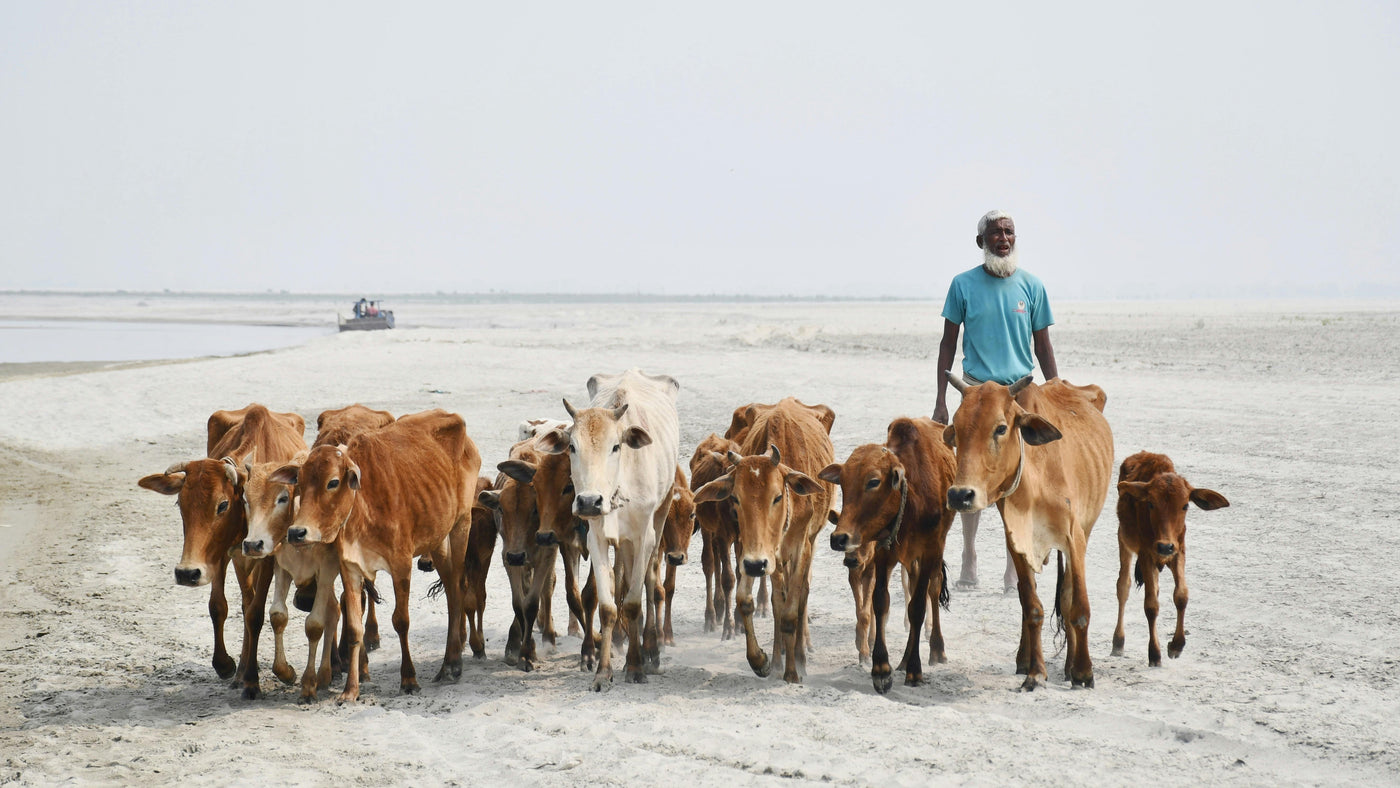
At Gusti Leather, we recognize that the use of leather raises ethical questions. That is why we have decided to provide transparent information about the origin of our raw materials. We use cowhide, goatskin, and Buffalo leather. The leather we use does not come from animals that are raised or slaughtered for their hides—it is exclusively a byproduct of the food industry.

Meat consumption involves the slaughter of animals—in India as well as in Europe. In this context, the skin is one of the byproducts that remain after the animal has been processed. Without being repurposed, it would typically be treated as waste and disposed of. By transforming it into durable products, we help make use of an existing resource rather than encouraging additional production.

A fully grown cow weighs between 500 and 900 kg on average. Depending on the breed, age, and living conditions, approximately 50 to 70% of its weight consists of meat intended for human consumption. The rest consists of bones, fat, organs, and skin. The skin is therefore a byproduct of this production chain.

We use these hides in our bags and accessories as part of a holistic approach to resource utilization. They are given a second life through artisanal craftsmanship, which transforms them into durable items that can be used for many years. This approach is part of a conscious effort to make use of existing resources. We also support more mindful consumption: buying less but better—and prioritizing products designed for longevity. In this spirit, we believe it makes more sense to use a material that already comes from the food industry than to leave this resource unused.

Meat Consumption in India: A Little-Known Reality

In Europe, India is often perceived as a predominantly vegetarian country. This perception is largely based on the common association between Hinduism and a meat-free diet. However, the reality is far more nuanced. Dietary habits vary greatly depending on region, religion, family tradition, and standard of living, and meat consumption is widespread today.

According to studies on dietary habits in India, approximately 77% of the population (aged 15–49) consumes meat, fish, or eggs—which shows that strict vegetarianism applies to only a minority of the population (about 20%). This proportion is particularly high in the south and east of the country, as well as in several northeastern states, where more than 90% of the population reports eating meat. Dietary practices therefore vary considerably from region to region.

This trend is driven by urbanization, rising living standards, and the country’s cultural diversity. In many regions, meat consumption is increasingly associated with higher purchasing power and a more varied diet, even among younger generations in some traditionally vegetarian Hindu families. India is also home to one of the world’s largest Muslim populations, as well as significant Christian, Sikh, and other communities, many of whom traditionally consume meat. As a result, domestic demand has grown steadily, making India one of the world’s largest beef producers. A significant portion of this production is exported, particularly to the Middle East, while the hides used in leather production are utilized as byproducts of this existing food industry.

Where do the slaughterings take place?

India is now one of the world's largest beef producers. By way of comparison, the EU produces about 8 million tons of beef annually, while India produces about 4.5 million tons.

Most of India’s slaughterhouses are located in the south (Chennai) and in the north of the country (Uttar Pradesh and Kolkata). This is where the majority of the meat exported to Qatar and Saudi Arabia comes from. The animals are slaughtered in accordance with religious regulations—primarily Islamic (halal) or Hindu (jhatka) rules. Both methods are designed to kill the animal quickly and efficiently to avoid unnecessary suffering.

From byproduct to craftsmanship: Gusti Leather's dedication

Recovering an existing resource is a first step, but what matters most is what you do with it. Gusti Leather works with small family-run businesses and local tanneries in India, Pakistan, and Italy, whose workshops we visit and inspect unannounced to ensure that the our contracts the specified conditions are met.

Unlike vegan leather, which is usually made from petroleum-based plastics (PU or PVC), our leather is a 100% organic byproduct of the food industry. Using an existing resource is far more environmentally friendly than manufacturing a completely new synthetic material from scratch. 

With proper care, it will last for decades; a Gusti bag is a purchase for life. That’s true sustainability, and Our Certifications This is evidenced by...

Engraving preview